“The term ‘extinct’ is too often used prematurely. The truth is: we’re just not looking hard enough.” – Forrest Galante
The Man Who Hunted What Was Lost
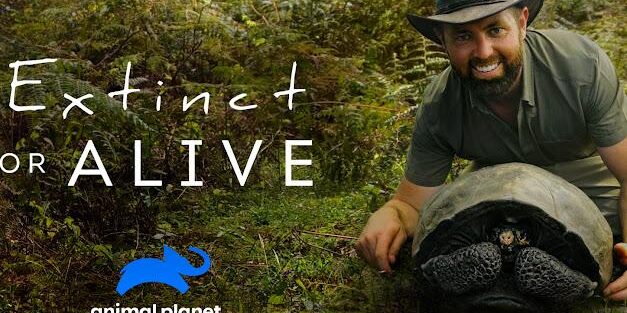
At the heart of some of the world’s most thrilling conservation rediscoveries stands a man with a machete, a drone, and an unshakeable instinct: Forrest Galante. Often called the last hope for species the world had written off, he’s not just a wildlife biologist. He’s an ecological detective. Host of Animal Planet show- Extinct or Alive, and Host at the Discovery Channel. A modern-day explorer willing to follow whispers, walk riverbanks that haven’t seen boots in decades, and ask one radical question:
What if extinction is a failure of effort—not fate?
Extinction: A Word We Use Too Soon
“To many, extinction is a conclusion,” Galante tells Journalist, Rhea Dadinath from PgGinger. “But for me, it’s a challenge. A provocation. We often stop searching when a species hasn’t been seen in decades. But how much of the wild world have we truly explored?”
Galante’s rediscovery of the Fernandina Island Galápagos Tortoise—not seen for 113 years—wasn’t just a scientific victory. It was a moment that changed the global conservation narrative, humbled certainty, and gave hope to a field too often defined by irreversible loss.
“The world is more mysterious than we give it credit for. Sometimes, to find what’s lost, you have to look with belief, not just GPS coordinates.”
When Science Isn’t Enough
Forrest doesn’t start with labs or grants. He starts with whispers — stories passed through generations, fragments in colonial records, strange sightings scribbled in field notebooks from the 1800s.
He cross-references mythology with geography, pairs local ecological knowledge with high-tech tools like drones, eDNA samplers, motion-triggered cameras, and directional audio bait callers.
“We treat extinction as a scientific certainty. But it’s often an emotional assumption. People say, ‘we looked.’ But they didn’t look long enough, or they didn’t look in the right way.”
Into the Shadows, Intentionally
His expeditions are not glamorous. He’s been bitten, stung, parasitized, and even contracted deadly infections. He’s had AK-47s aimed at his team. But he doesn’t flinch.
“There’s a misconception that rediscovery is a National Geographic photoshoot,” he says. “It’s mostly being muddy, tired, and searching through information no one else respects.”
And when he finds something? Often, he stays silent.
“Some discoveries we don’t announce, because we’d rather protect the species than get the credit. Conservation is more important than headlines.”
India: A Sleeping Giant of Rediscovery
“India is bursting with opportunity,” Galante says. “You have stories of the Pink-Headed Duck, the Jerdon’s Courser, the Namdapha Flying Squirrel. These aren’t myths. They’re just species waiting on the right kind of searcher.”
He expresses deep admiration for Vantara, India’s new wildlife rehabilitation and conservation project. “If done right, Vantara could become a blueprint for conservation on the planet,” he notes. “But it has to invest in field biologists, young ecologists, storytellers, and rediscovery projects. That’s how you build a movement.”
He even hints at something more.
“There’s a particular extinct shark in India I’m almost certain is still extant. We’re prepping for that. Check in with me next year.”
Why Rediscovery Matters
Rediscovery isn’t just about proving science wrong. It’s about proving wonder right.
“You don’t just bring a species back for data. You bring it back for hope. For culture. For the children in that region who will now grow up in a place where wonder still walks.”
In an age of climate fatigue and despair headlines, rediscovery tells a different story — one of reversal, not collapse.
“The world needs wins. And rediscovery is a win not just for an animal, but for a generation that’s tired of losing.”
The Ethical Edge
Galante is quick to clarify that with rediscovery comes responsibility. “There’s a fine line between celebrating a rediscovered species and endangering it through exposure. That’s why some of our most significant finds are still under wraps.”
He’s seen the impact of greed, tourism, and media pressure first-hand. “I’m not anti-technology or anti-fame. But I am pro-species. Sometimes, the best thing for a rediscovered animal is to stay in the shadows a little longer.”
A New Kind of Scientist
Forrest Galante doesn’t look like a typical academic. And that’s part of his point.
“We need more scientists who are storytellers. Who can walk into a classroom, or a village, or a production studio, and ignite belief.”
He’s currently building his dream: a global network of search-and-rescue ecologists with local guides, biodiversity trackers, and filmmakers. A multi-lingual, cross-border coalition of wildlife believers.
“Young people in India could lead that. You’re sitting on the biodiversity jackpot of the world. Don’t wait.”
Final Word
Forrest Galante doesn’t just find lost species—he reminds us that curiosity, belief, and persistence are wild tools in themselves. As India steps into a new era of conservation, his message is clear:
“We haven’t lost everything—some things are just waiting to be found again.”
Written by Rhea Dadinath
For PgGinger. All images courtesy Forrest Galante.